
How to Sell Gold in an IRA: Buybacks, Spreads, and Getting a Fair Bid
Selling gold inside a gold IRA is a trade, not a withdrawal. The metal leaves the depository, a dealer pays for it, and the money lands in the IRA as cash. Nothing reaches your bank account from the retirement account, and no tax is due, until you ask the custodian for a cash distribution.
That separation is the key to every decision here. You can sell and keep the cash in the IRA. You can sell and take the cash out. Or you can skip the sale and take the metal itself. This guide walks through each path, the paperwork, the spread, and the taxes, using IRS rules and a CFTC investor advisory.
I rolled part of my own retirement into a gold IRA, so the exit is something I check before I buy. Sean Webster, CPA, reviewed the tax sections. This is not a ranking of buyback desks; for company comparisons, see our gold IRA companies page.
IRAInvesting.com may earn a referral fee if you work with a company we review, including the partner quoted later in this guide. That does not change what we report here. See our affiliate disclosure.

Who is involved when you sell gold in a gold IRA
Three parties handle a sale. Knowing who does what keeps the process moving.
The self directed IRA custodian
The self directed IRA custodian holds title for the IRA, keeps the records, and approves every sale. Custodians that are not banks must be on the IRS list of approved nonbank trustees, which is why gold IRA marketing calls them an IRS approved custodian. An IRS approved custodian still does not vet the metal’s price for you. Nothing leaves the account without the custodian’s sign-off.
The depository
An approved depository holds the physical precious metals. When you sell, the depository releases the metals to the buyer on the custodian’s instruction.
The precious metals dealer
The dealer makes the bid and buys the gold. It may be the dealer that sold you the metal or a different one. Our custodian vs dealer guide explains the roles.
How to sell gold in a gold IRA, step by step
The steps below describe the general process. Each self directed IRA custodian has its own forms, cutoffs, and fees, so read yours before you start.
Step 1: Confirm what you own
Pull your latest statement and your account number. List each product, its weight, and its quantity, such as American Gold Eagles, American Silver Eagles, or bars. Your statement may show a “melt” value; the CFTC says custodian statements typically show weight times the spot price.
Step 2: Get a bid for the exact products
Ask for a bid on the exact gold products and quantity you plan to sell. A bid for a different coin, or from last month, tells you little. Compare more than one dealer if your custodian allows it.
The CFTC’s advice for buyers applies to sellers too: “Ask how much you would receive if you had to sell back the metal tomorrow.” Write down the time and spot price for every bid you get.

Step 3: Sign a sell direction letter
Once you accept a bid, the custodian needs your written authorization. Some custodians call it a sell direction. Others use a trade or liquidation form. It names the products, the quantity, the buyer, and the agreed price.
Step 4: Settlement and the cash balance
The depository ships the metals to the buyer. The buyer then must send funds to the custodian for the IRA. The proceeds post to the IRA as cash, still inside the retirement account. Ask when the funds will be available. Get the custodian’s and dealer’s settlement timing in writing; we don’t publish typical timelines because they vary.
Step 5: Decide what happens to the cash
You now have three choices. Leave the cash in the gold IRA, buy other investments inside the gold IRA, or request a cash distribution. Only the last one is a withdrawal, and only a withdrawal can trigger tax. If you’d rather hold gold than cash, see the in kind option below.
Reinvesting inside the gold IRA keeps your retirement money sheltered. A self directed IRA can usually hold investments beyond metals, and a standard brokerage IRA can hold funds and stocks if you transfer the cash there. Those funds and other investments follow the same IRA tax rules.
The cash balance: selling is not a cash distribution
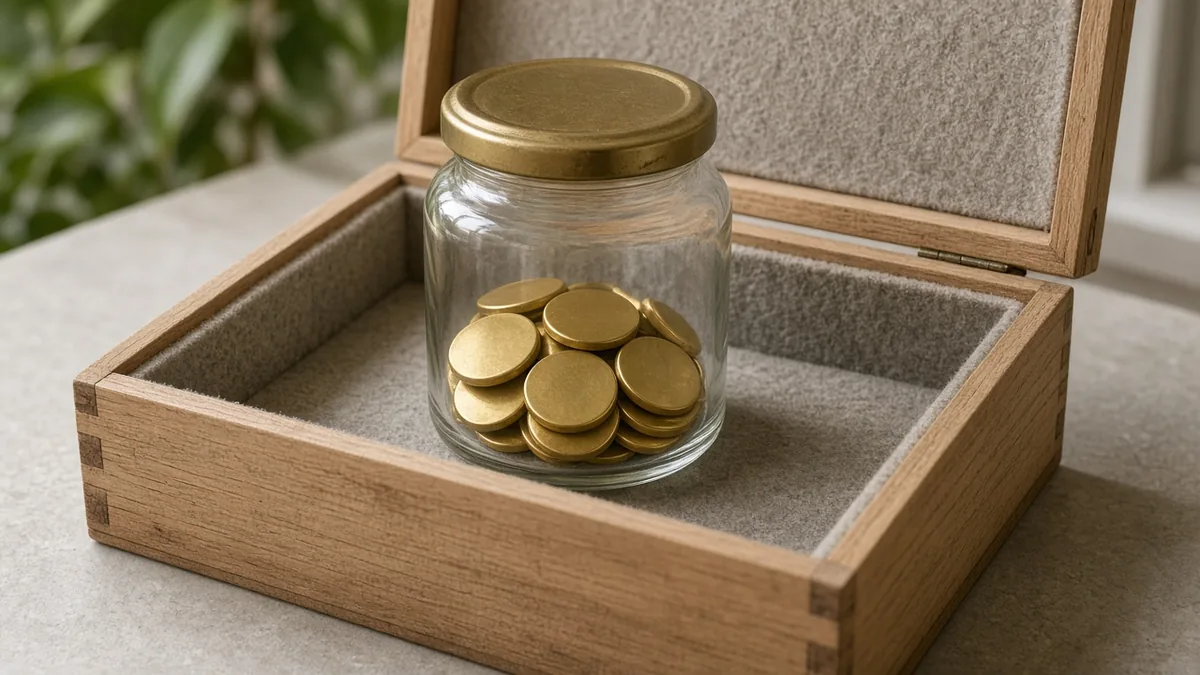
A sale inside an individual retirement account is not a taxable event. The proceeds stay in the account as cash. You owe no tax on that money while it stays in the IRA, because a gold IRA is a tax-deferred or tax-free retirement account.
Many clients choose to leave proceeds in cash while they decide on new investments. Others move them into other investments right away. A cash distribution out of the retirement account is a separate request with its own form and its own tax result.
If your goal is to change providers, you may not need to sell at all. A trustee-to-trustee transfer can move metal in kind to a new custodian. See our guide to switching gold IRA custodians.
How do you cash out a gold IRA?
To cash out a gold IRA, you sell the metal and then take a cash distribution from the retirement account. You can do both in one request or months apart.
A partial sale
You can sell part of your gold IRA assets and keep the rest. Many owners sell only what they need for a distribution or an RMD. A partial sale has no tax effect by itself. Fees may apply per sale, so ask before you split a sale.
A full liquidation
A full sale closes out the metals position. If you also close the account, ask about termination or closing fees. Our gold IRA fees guide covers these charges.
Selling to meet required minimum distributions
If you are 73 or older, a traditional IRA must pay required minimum distributions. Required minimum distributions are calculated on the whole account, including gold. Selling enough gold IRA metals to cover the RMD, then taking the cash, is one option. Our gold IRA RMD guide covers the timing, including why to start before December.
The starting age comes from SECURE 2.0. The statute sets it at 73 for people who reach 72 after 2022 and turn 73 before 2033, and at 75 for people who reach 74 after December 31, 2032 (IRC 401(a)(9)(C)(v)).
Missing an RMD is costly. Pub. 590-B says the excise tax is 25% of the amount not taken, reduced to 10% if you correct it within the correction window. Roth IRA owners have no RMDs during their lifetime, according to the IRS, so a Roth gold IRA never forces a sale while you’re alive; beneficiaries follow different rules.
Which gold products are easiest to sell? IRA eligible coins and bars
The products you bought decide how easy a sale will be. IRA eligible gold products include certain U.S. coins named in the tax code, such as American Gold Eagles, and gold bullion of the required fineness held by the trustee (IRC 408(m)(3)). The same applies to silver, platinum, and palladium, and to other precious metals that meet the rules.
The CFTC says bullion coins or ingots “share a common investment-grade purity and weight,” while coins sold as semi-numismatic are “likely less liquid—harder to sell—than bullion.” If you plan to buy gold for a precious metals IRA, ask about the buyback before you buy, not only when you sell. Our IRS-approved gold and silver guide explains which gold products and precious metals qualify.
Fees to ask about before you sell
The spread is not the only cost. Ask for each of these fees in writing before you sign:
- The custodian’s fee for processing a sale or trade.
- Any wire fees to send funds out of the account.
- Depository release, shipping, or insurance fees, and who will pay them.
- Account closing fees, if you are liquidating everything.
We don’t quote typical fees here because they vary by firm and change over time. Compare the fees with the spread, since a small listed fee can sit next to a wide bid gap. The CFTC tells buyers to ask for “all fees, costs, commissions, and agreed retail price in writing”; the same habit protects you as a seller.
Cash distribution vs in kind distribution
You don’t have to sell to get value out of a gold IRA. An in kind distribution sends you the physical gold instead of cash.
How an in kind distribution works
With an in kind distribution, the custodian ships the metals to you and reports it on Form 1099-R. The 2026 Form 1099-R instructions require the custodian to report “the FMV of the securities or other property on the date of distribution.” So an in kind distribution is taxed on fair market value, just like cash. Either way, the tax is based on value, and the amount is added to your income.
Which one fits
Choose a cash distribution if you need money and want the dealer to handle the metal. Choose an in kind distribution if you want to hold physical gold outside the IRA. After an in kind distribution, you sell later yourself, and the capital gains rules for physical metals apply. Our in kind distribution guide covers shipping and basis.
The spread: what a buyback really costs
The biggest cost in a sale is usually the spread, not a listed fee.

What the CFTC says about spreads
The CFTC says: “A dealer will always sell metal above the spot price and buy it back below the spot price. The difference between the dealer’s buy and sell price is known as the dealer’s spread.”
The CFTC adds that each dealer sets its own spread and that some fraudulent dealers have charged spreads of more than 300 percent.
The CFTC also warns that coins sold as “numismatic” or “semi-numismatic” are likely less liquid than bullion. If you hold those, expect fewer bidders.
Compare your bid with spot
Use a simple check. Multiply the metal’s weight by the spot price, then compare that number with the bid price for the exact products. As a hypothetical, if the melt value is $10,000 and the bid is $9,700, you are selling $300 under melt. That is illustrative math, not a typical spread.
What one partner says about its buyback
Augusta Precious Metals, a company we review and a partner of this site, published a page on November 3, 2026 about selling part of a gold IRA. We read it on November 11, 2026.
Augusta says it does not charge a separate dealer liquidation fee, and that the custodian it works with, Equity Trust, charges a $30 processing fee for buybacks. Augusta also says its customers are not required to sell back to Augusta. These are Augusta’s own statements; we did not verify them independently, and other firms may differ.
Gold IRA taxes when you sell
How is gold taxed in an IRA?
Gold in an IRA is taxed by the account’s rules, not as a collectible. Sales inside the account create no capital gains, no capital losses, and no tax bill. Tax comes only when money or metal leaves the IRA.
Traditional IRA: when you owe taxes and income tax
A cash distribution from a traditional gold IRA is taxable income. You pay income tax at ordinary income rates, plus a 10% additional tax on early distributions before 59½ unless an exception applies. Withholding is generally 10% unless you elect otherwise on Form W-4R (Pub. 590-B).
Roth IRA: qualified distributions are tax free
From a Roth IRA, qualified distributions are tax free, and a sale inside a Roth IRA is not a taxable event either. Both traditional and Roth IRAs follow the same sale process; only the tax on the distribution differs. See our Roth gold IRA guide.
Capital gains, cost basis, and capital losses
Inside an IRA, your cost basis in each coin does not affect your tax. The only IRA cost basis that matters is basis from nondeductible contributions to a traditional IRA, tracked on Form 8606. The capital gains rules start only when you hold the metal outside the account.
Once metal is distributed in kind and you later sell it yourself, IRS Topic 409 applies. Long term capital gains on collectibles, such as coins, are taxed at a maximum 28% rate; long-term gains require a holding period of more than one year. Short-term gains are taxed as ordinary income. Capital losses beyond your gains can reduce income by up to $3,000 a year ($1,500 if married filing separately). Ask your tax advisor how your cost basis is set after an in kind distribution.
The wash sale rule
The wash sale rule in IRC 1091 is written for sales of “stock or securities.” It does not apply to a gold sale inside an IRA, where no loss is claimed. If you also hold metal funds or other investments in a taxable investment portfolio, ask a tax advisor about the tax implications.
How much tax do I pay if I sell my gold?
Inside the IRA: no tax at the time of sale. You pay taxes later, if at all, when money leaves the account. When you take a cash distribution from a traditional IRA, you pay taxes at your income tax rate on the taxable amount. A qualified Roth distribution is tax free. Outside an IRA, gold you sell is taxed under the capital gains rules above.
How does the IRS know if I sell gold?
For a gold IRA, the custodian reports. It files Form 1099-R for each distribution, cash or metal, and Form 5498 with the account’s year-end fair market value. The IRS requires you to report the taxable part on your tax return.
Mistakes to avoid when you sell gold
- Accepting the first bid without comparing it with spot.
- Taking a cash distribution when you meant to leave money in the gold IRA, which creates tax you didn’t plan for.
- Asking to have gold IRA metal shipped home “for safekeeping.” That is a distribution; see our gold IRA storage guide.
- Selling under pressure from a caller. The CFTC says to ask for all fees in writing; our gold IRA scams guide lists red flags.
- Waiting until late December for an RMD sale.
Final thoughts on selling gold in an IRA
Knowing how to sell gold in a precious metals IRA protects your retirement savings. Get bids on the exact IRA eligible products, compare them with spot, and keep the sale and the distribution as separate decisions, because only the distribution has tax consequences. A sale changes your mix of retirement investments, so review the whole plan. Your gold IRA can hold other precious metals too; the same process applies to silver, platinum, and palladium investments.
For the bigger picture, our gold IRA withdrawal rules hub compares every exit, and our gold IRA taxes guide covers reporting. If you are just getting started, our gold IRA rollover guide explains how to buy gold in a retirement account, and how to choose IRA eligible metals that are easier to sell later.
Written by Tim Schmidt and reviewed for tax and account accuracy by Sean Webster, CPA. Last reviewed November 11, 2026 (America/New_York). Tax figures reflect IRS guidance for 2026 as of that date. Partner statements are attributed to the partner and dated. This guide is for general education. It is not tax, legal, or investment advice, and it is not a recommendation to buy or sell any metal or to open any account. IRAInvesting.com is not a custodian, dealer, broker-dealer, or investment adviser. Before you act, talk with a licensed tax professional or adviser who can review your situation. Investing in precious metals involves risk, including the possible loss of principal. Metals can be volatile, and they do not pay interest or dividends. Past performance does not guarantee future results.