
Gold IRA Storage: Depositories, Segregated vs Commingled, and Why Home Storage Fails
Precious metals in a gold IRA have to stay in the possession of a qualified trustee — not in a home safe, a bank box, or an LLC arrangement that ends with coins on your kitchen table. Promoters who tell you otherwise can turn IRA assets into a taxable distribution.
This page explains storage of precious metals in our cluster. The gold IRA rollover article still explains the move itself. Sean Webster, CPA, reviews these guides for accuracy. I keep part of my retirement savings in physical precious metals, as a precious metals allocation among my other precious metals decisions — in a depository, not at home.

Gold IRA storage explained
A gold IRA is a retirement account that can hold eligible precious metals. Gold IRA storage is how those IRA metals are held while they remain retirement assets. It is not optional if you want the tax advantages of the account.
Mutual funds in a brokerage IRA do not need a vault. Physical gold and other physical precious metals do. The account holder does not store IRA assets personally. The IRA custodian uses a professional storage facility — an approved depository — so the metals remain under trustee control, stored securely, with custody records the IRA owner can request. How much gold you buy does not change that IRS rule. Precious metals storage is an operational cost of this kind of retirement account, not a workaround, and a precious metals IRA does not get a special home-storage exception.
What the law actually requires
Eligible bullion is excepted from the collectibles rule in Internal Revenue Code section 408(m)(3)(B) only “if such bullion is in the physical possession of a trustee” described in section 408(a). The trustee is a bank or an IRS-approved nonbank trustee, commonly called the IRA custodian.
The IRS IRA FAQ, reviewed November 10, 2026, says the same, including when an IRA-owned LLC buys the metal.
Marketing language about an “IRS-approved depository” is looser than the statute. The legal requirement is trustee possession. In practice, an approved depository is the vault where that possession is exercised. Our dealer vs. custodian vs. depository guide separates those roles.
Names you will hear include Delaware Depository, International Depository Services, and the Texas Bullion Depository. I am listing known facilities, not reporting a fresh audit. A gold IRA company that cannot name the trustee and the approved depository is not ready for your money.
Home storage gold IRA: why the pitch fails
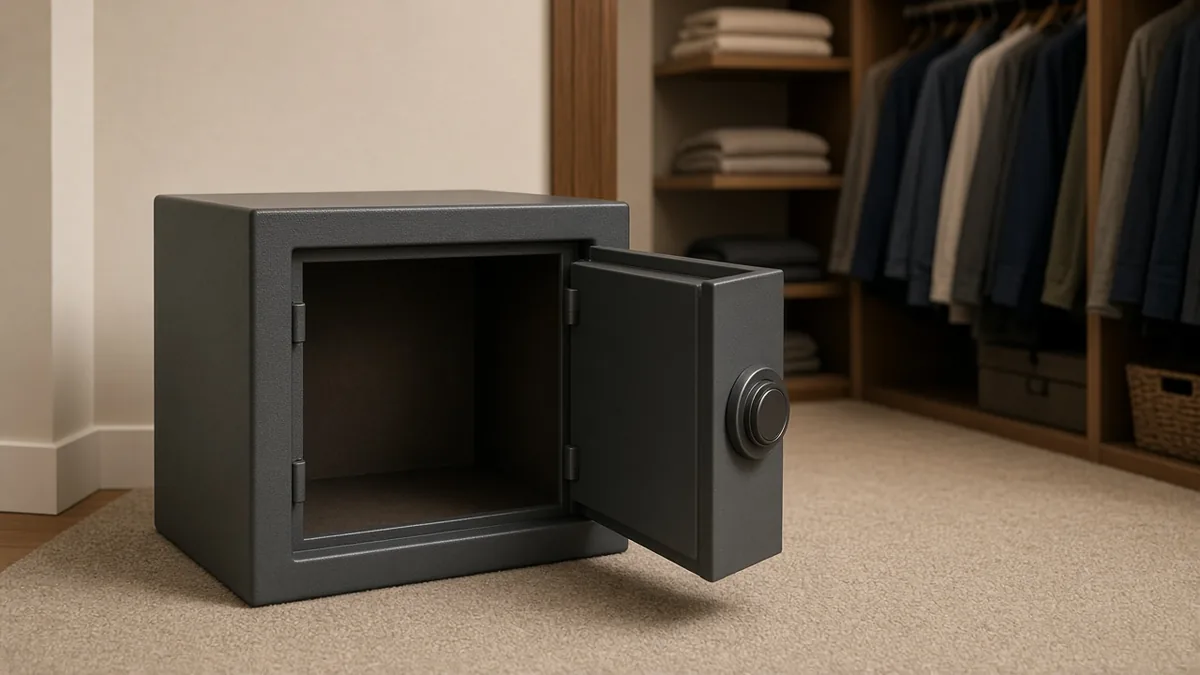
A home storage gold IRA is one of the most persistent pitches in this market. IRS regulations and the IRS FAQ reject it. IRS rules require trustee possession. Taking gold coins or bars home is personal possession, and the IRS treats that as a distribution of retirement assets.
In McNulty v. Commissioner, 157 T.C. No. 10 (2021), American Eagle gold coins bought through an IRA-owned LLC were shipped to the account holder’s residence. The Tax Court held that taking the coins was a taxable distribution equal to their cost, and it imposed accuracy-related penalties.
If the metals stored in the gold IRA are in your house, you have a problem the Tax Court has already seen. A home safe can be reasonable for metal you own personally, after a proper distribution from a retirement plan. That metal is no longer in the IRA.
Segregated vs. commingled storage

Once the precious metals held in the gold IRA are in a professional vault, you will usually be offered one of two arrangements. Some facilities offer commingled storage and segregated storage side by side. Commingled storage depends on the metal being fungible.
Segregated storage means your specific gold coins or bars are stored separately and identified as yours. Commingled, or non-segregated storage, pools your metal with other customers’ holdings of the same type and purity. You receive equivalent metal on distribution, not necessarily the exact pieces.
Segregated storage typically costs more. Neither option lets you take the metal home while it remains in the gold IRA.
How a depository fits next to the custodian

A typical gold IRA purchase moves like this. The custodian pays the dealer from the IRA. The dealer ships the metal to the approved depository. The depository receives it and holds it under the custodian’s account structure. You get a statement, not a package at your door.
If the dealer goes out of business, the custodian and the approved depository should still identify the IRA’s gold assets. Retirement savers should know both names and should maintain records.
Reputable depositories describe controlled access, secure logistics, and strict security procedures at the storage facility. Ask, in writing, which approved depository will hold the metal, whether storage is segregated or commingled, and how holdings are audited. Strict security protocols and a clean security-breach record are questions, not slogans.
Insurance coverage
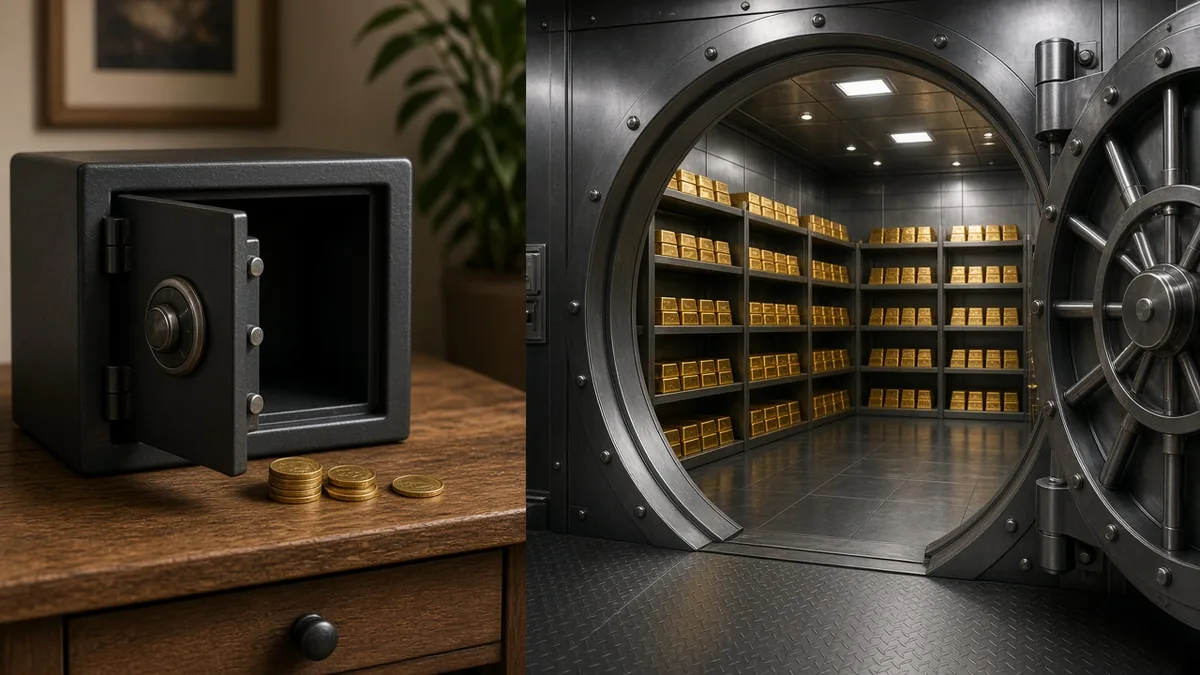
Insurance coverage is one of the first questions an account holder should ask about precious metals storage, and one of the easiest for a salesperson to leave vague.
I opened Delaware Depository’s public insurance FAQ on November 10, 2026 (America/New_York). Delaware Depository states that it maintains $1 billion in “all risk” insurance coverage for bullion in its high-security vaults, plus $100 million in contingent vault coverage, through London underwriters. On a related April 30, 2024 commitment page, the firm names Lloyd’s of London underwriters for that all-risk insurance. The FAQ says the policy includes physical loss or damage, theft, employee dishonesty, and loss from fire, flood, or other natural disaster. It excludes war, terrorism, cyber-attack, and certain other listed risks.
That is Delaware Depository’s description of its own policy, not a rule that every approved depository uses Lloyd’s or the same limits. I am not telling you the insurance will pay the “full value” of every coin in every case. Ask for the document that applies to your gold IRA, who the insured party is, and how market value would be determined after a loss.
The same firm also states that internal and external audits are done annually by a PCAOB-registered independent accounting firm, and that it has operated as a storage facility since 1999 — over a decade, in fact. Those are the firm’s statements about its own controls, not an IRS-mandated audit rule I found in the FAQ. Insurance coverage and records still belong in your due diligence, because valuable assets in a vault are only as useful as the policy behind them. Asset protection starts with a lawful structure and an approved depository you can name.
Personal metal versus IRA metal
People reasonably want some physical gold they can touch. That is a personal decision, not a storage decision for the retirement account. Metal you take as a proper distribution from the entire IRA, or buy with after-tax cash, can live in a home safe or a bank box you control. It is no longer in the retirement account.
Keep personal coins and IRA metals as two holdings. Do not merge them to save storage fees. See the fees guide. A self-directed IRA is still an IRA. Eligible gold and silver in the account, and metal in your safe, should never share a box. If you only want gold-price exposure, a gold ETF in a brokerage IRA is a different design.
Storage fees, RMDs, and taking metal out later
Storage fees are an annual gold IRA cost. They may be a flat annual rate or scaled to account value. Combined with custody, they are the ongoing cost of keeping physical gold in the IRA after the purchase spread. You still want insurance coverage and administration in writing.
Required minimum distributions can be awkward with physical assets. You may sell metal for cash or take gold coins in kind. That is still a distribution, and IRS reporting still applies. Our RMD guide covers the rules. Storage cannot fix an ineligible coin; see the silver and platinum and palladium guides for the other metals.
Warning signs in a storage pitch
- “You can legally store IRA gold at home if we use an LLC.”
- “The IRS-approved depository is your own safe.”
- No named custodian, or a “custodian” that is just the dealer.
- Storage fees charged for metal that has no independent confirmation it was received.
- Pressure to skip written depository details.
Those are red flags. If the storage story is the sales hook, that is backwards. Gold IRA storage is a compliance requirement, not a bonus feature.
Gold IRA storage FAQ
Can I store gold IRA gold at home?
No. The IRS says qualifying bullion must stay in the physical possession of a bank or an IRS-approved nonbank trustee, including when an IRA-owned LLC buys the metal. McNulty v. Commissioner treated coins taken home as a taxable distribution.
What is an IRS-approved depository?
The statute requires trustee possession, not a magic depository label. In practice, a qualified custodian holds the metal at an approved depository — a professional vault. Ask for both names.
What is the difference between segregated and commingled storage?
Segregated storage means your specific pieces are stored separately. Commingled storage gives you a claim on a quantity of interchangeable metal of the same type and purity. Segregated storage usually costs more.
What happens to my gold if the dealer goes out of business?
The IRA custodian and the approved depository should still have the account and the metal. Those names belong on your paperwork.
Can I take physical delivery from a gold IRA?
Yes, as a distribution, with the tax consequences of a distribution. That is not the same as a home storage gold IRA while the account remains open.
The bottom line
Gold IRA storage is a custody rule. Eligible precious metals stay with a qualified trustee under the gold IRA, almost always at an approved depository, in a segregated or commingled arrangement you should be able to explain in one sentence. A home storage gold IRA, with or without an LLC story, is how people turn retirement metal into a taxable distribution. If you are still choosing a firm, return to the companies hub after you understand this rule — not before.
Written by Tim Schmidt and reviewed for tax and account accuracy by Sean Webster, CPA. Last reviewed November 10, 2026 (America/New_York). This guide is for general education. It is not tax, legal, or investment advice, and it is not a recommendation to buy or sell any metal or to open any account. IRAInvesting.com is not a custodian, dealer, broker-dealer, or investment adviser. Before you act, talk with a licensed tax professional or adviser who can review your situation. Investing in precious metals involves risk, including the possible loss of principal. Metals can be volatile, and they do not pay interest or dividends. Past performance does not guarantee future results.