
Transfer Gold IRA to Another Custodian: How to Move Your Metal Without Selling It
You can move a gold IRA to a new custodian without selling a single coin of physical gold. The safe way is a direct trustee-to-trustee transfer, where your current IRA custodian sends the account, and the metal, straight to the receiving custodian. Nothing is paid to you, so nothing is taxed.
This guide is about metal you already own in a gold IRA. If you’re moving money from a 401(k) or another existing retirement account into metals for the first time, see our gold IRA rollover guide instead.
I’ve been through the gold IRA rollover process myself, and I keep physical metals in a self-directed IRA today. The rules below come from IRS Publications 590-A and 590-B and the Form 1099-R instructions, not from any company’s sales script.
IRAInvesting.com may earn a referral fee if you work with one of the gold IRA companies we review. That doesn’t change the IRS rules or the steps here. See our affiliate disclosure.
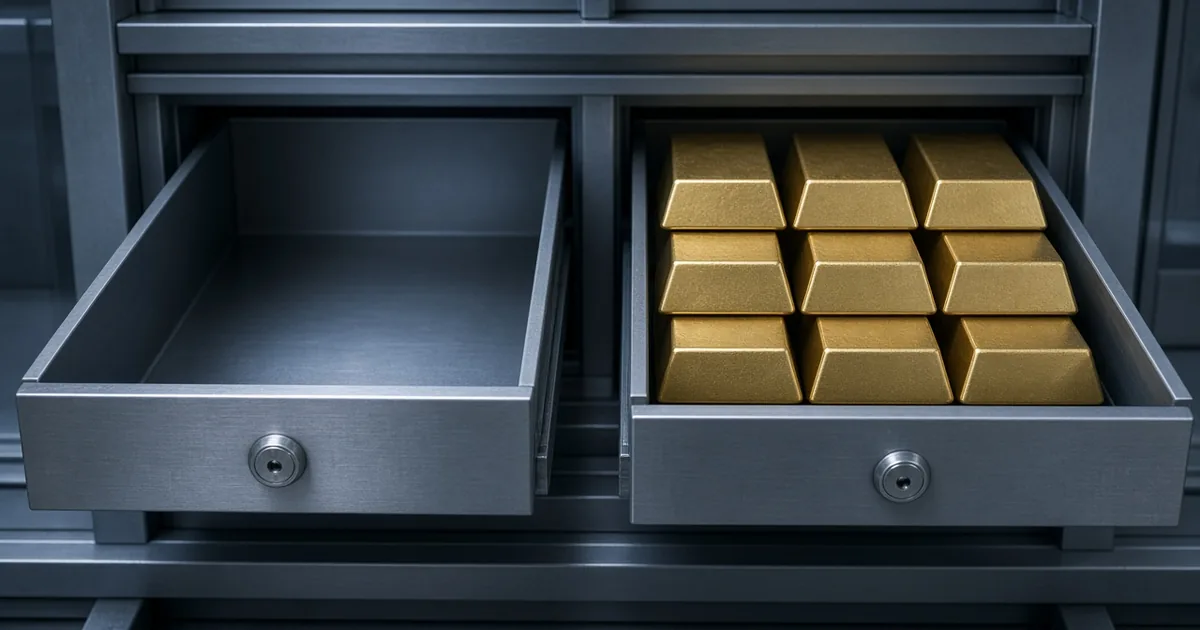
Why people move IRA metals to a new custodian
Most moves start with one of a few reasons. None of them requires selling your metal.
Fees. Account fees, storage fees, or transaction fees went up, or new pricing arrived that you don’t like.
Service. Statements are late, calls go unanswered, or a sale or distribution took longer than you expected.
Depository. You want a different vault for storing IRA metals, or segregated rather than commingled storage.
Consolidation. You hold several precious metals IRA accounts, or a self directed IRA at one firm and a gold IRA at another, and want one statement.
The custodian changed. It was sold, merged, or stopped serving the gold IRA space.
Whatever the reason, the job is the same: move the gold IRA to a new custodian while keeping it an individual retirement account the whole time. Your retirement funds never leave the IRA system.
Custodian, precious metals dealer, or depository: who are you switching?
Before you move anything, be clear about which party you want to replace. Many people say “gold IRA company” when they mean three different firms.
The gold IRA custodian holds the IRA, keeps the records, and reports to the IRS. It must be a bank or an IRS-approved nonbank trustee.
The precious metals dealer, often the gold IRA company or gold IRA provider you saw in an ad, sells and buys the physical gold.
The depository stores the physical bullion for the custodian.
If you only want a different gold IRA company for future metal purchases, you may not need to move the account at all. Ask your current custodian whether it will work with another precious metals dealer or gold IRA company. Our gold IRA custodian vs. dealer guide explains each role.
Transfer vs. rollover: the method matters
The IRS treats a transfer and a rollover very differently. With physical gold, the difference is bigger than with mutual funds.

Trustee-to-trustee transfer
Pub 590-A says a transfer of funds from one trustee directly to another “isn’t a rollover.” Because there’s no distribution to you, the transfer is tax free.
It also isn’t limited by the one-rollover-per-year rule. You can make more than one trustee-to-trustee transfer in a year.
The Form 1099-R instructions tell custodians generally not to report a trustee-to-trustee transfer from one IRA to another. So a clean trustee transfer shouldn’t create a taxable distribution on your tax return.
Indirect rollover
An indirect rollover means the old custodian distributes the assets to you, and you redeposit them in a new IRA within 60 days. You can do only one IRA-to-IRA rollover in any 12-month period, counting all your IRAs. Pub 590-A applies the limit across your traditional, Roth, and SIMPLE IRAs together, treating them as one IRA. Its example shows a rollover from one IRA blocking a tax-free rollover from a different IRA in the same 1-year period. Trustee-to-trustee transfers and Roth conversions don’t count toward that limit.
With metal, an indirect rollover is risky. Pub 590-B says that if the owner takes possession of IRA coins, they’re treated as distributed. Pub 590-A adds that a rollover of property is tax free only if you roll over the same property you received.
So taking personal possession of coins, even for a week, can turn a planned move into a taxable distribution if anything goes wrong. Miss the 60 days, and the full value becomes taxable income, plus a possible 10% additional tax if you’re under 59½.
Direct rollover from a workplace plan
A direct rollover is the term for moving money from employer sponsored retirement plans, such as a 401(k), straight to an IRA. The plan administrator sends the funds to the IRA custodian. A direct rollover avoids the mandatory withholding that applies when a plan pays you instead. Ask your plan administrator for its direct rollover form.
A gold IRA rollover lets you move workplace savings into a self directed IRA that can buy metal. But a gold IRA rollover from a 401(k) usually moves cash, not coins.
This page covers moving metal already in an IRA, where a transfer, not a gold IRA rollover, is the right tool.
Which method to use
For metal already in a gold IRA, use a trustee-to-trustee transfer. Avoid an indirect rollover unless a tax professional has reviewed your plan. Our IRA transfer vs. rollover guide compares both methods for any IRA.
Gold IRA rollover vs. transfer: common mix-ups
Sales pages often call every move a gold IRA rollover. That’s loose language. In IRS terms, a rollover runs through you, and a transfer doesn’t.
When a dealer offers to “handle your gold IRA rollover” to a new custodian, ask which method it means. If the answer is a 60-day indirect rollover of physical gold, ask for a direct transfer instead.
A gold IRA rollover from an existing retirement account is still the right tool when money starts in a 401(k) or 403(b). The plan administrator handles that direct rollover. Once the money is in a gold IRA, later moves between IRA custodians are transfers.
Keep both terms straight on the paperwork. The receiving custodian’s transfer form, not the dealer’s gold IRA rollover kit, is what moves metal from one IRA custodian to another.
The same-account-type rule: Roth IRA to Roth IRA
A transfer moves an account into the same kind of account. A traditional IRA goes to a traditional IRA. A Roth IRA goes to a Roth IRA.
If you move metal from a traditional IRA into a Roth IRA, that’s a Roth conversion, not a transfer. The value converted is taxable income. See converting a gold IRA to a Roth for the tax implications.
SEP IRAs generally move to a traditional IRA. A SIMPLE IRA has an extra rule: during the first two years of participation, it can move tax free only to another SIMPLE IRA.
The IRS SIMPLE IRA page spells out the cost of getting that wrong. A move to a different kind of IRA during the 2-year period is treated as a withdrawal. The amount is included in income, and an additional 25% tax applies unless you’re 59½ or older or another exception fits. After the 2-year period, a SIMPLE IRA can move tax free to a traditional IRA or an employer plan. It can also go to a Roth IRA then, but any untaxed money moved counts as income. Check the date you first joined the employer’s SIMPLE plan before you ask for a move.
An inherited IRA must go to another inherited IRA titled in the deceased owner’s name for your benefit. See our inherited gold IRA guide.
In-kind transfer vs. selling and rebuying
You have two ways to move a gold IRA. You can transfer the metal in kind, or sell metals at the old custodian and transfer cash.
Moving eligible metals in kind
An in-kind transfer moves the same coins and bars. You keep your holdings, and you avoid paying a dealer spread twice, once to sell and once to rebuy.
For an in-kind move, the receiving custodian has to accept every product you hold. The tax code’s coin exception, section 408(m)(3)(A), names the one, one-half, one-quarter, and one-tenth ounce American Gold Eagles described in 31 U.S.C. 5112(a), the one-ounce American Silver Eagle, and platinum coins under 5112(k). Bullion qualifies under 408(m)(3)(B) when its fineness meets the minimum a regulated futures exchange requires for delivery and a trustee holds it. The statute doesn’t state a percentage, so ask the new custodian which standard it uses, in writing, for each of the precious metals you hold. Coins that aren’t on the statute’s list, including foreign bullion coins, have to qualify under the bullion rule instead.
Each custodian still sets its own product list. Some may not accept a less common bar, coin, or product. Get the new custodian’s list of eligible metals in writing and compare it with your statement.
Selling, then using cash to buy gold again
Selling first can make sense if the new custodian won’t accept a product, or if you want to change what you hold. But a sale exposes you to the dealer’s bid, transaction fees, and price changes while cash moves.
If you sell, do it inside the IRA. The sale proceeds stay in the account, so the sale itself isn’t taxed. See how to sell gold in an IRA.
Does the depository change too?
A custodian and depository are separate firms. Switching one doesn’t always mean switching the other.
Same depository, new custodian
If the new custodian works with the depository you already use, the move may be mostly paperwork. The depository changes whose account the metal sits under. Ask both custodians whether that’s possible for your account.
New depository
If the depository changes, the metal itself has to be shipped between vaults. Ask who arranges the shipment, who insures it in transit, and who pays.

Segregated vs. commingled storage
With segregated storage, your specific bars and coins are held apart. With commingled storage, you own a claim to products of the same type and amount. Ask how a commingled account is matched when it moves to another depository. Our gold IRA storage guide explains both.
How to transfer a gold IRA to a new custodian, step by step
Step 1: Read your current account agreement
Find your current gold IRA custodian’s account agreement and fee schedule. Look for transfer fees, account-closing fees, and any notice period.
Check whether fees are charged per account, per transfer, or by account value. That account structure can change the math. Ask what happens to fees already prepaid for the year.
Step 2: Choose a new gold IRA custodian
The new custodian should be a bank or on the IRS list of approved nonbank trustees and custodians. Confirm it on the IRS list yourself.
Ask the new custodian for its full fee schedule in writing, including storage fees. Ask which depositories it uses, and whether it accepts each product on your current statement.
Compare custodians on our self-directed IRA custodians page.
Step 3: Open the new IRA
Open a new IRA of the same type at the receiving custodian. This is your new gold IRA, a self directed IRA that can hold metal. A traditional IRA needs a new traditional IRA, and a Roth IRA needs a new Roth IRA.
Name your beneficiaries on the new account. A transfer doesn’t always carry the old designation forward.
Step 4: Submit the transfer paperwork
The new custodian usually gives you the transfer paperwork. On the form, ask to move the assets “in kind.” List each product, the quantity, and the depository from your latest statement. Attach a copy of that statement.
Sign only after you’ve checked every line. A wrong product name or a missing bar can slow the move.
Step 5: The receiving custodian requests the assets
The new custodian sends the request to your current custodian. The current IRA custodian may confirm the request with you before releasing anything.
Step 6: The metal moves or is retitled
The depository either retitles the metal or ships it to the new depository. Neither step should involve you taking delivery.
Step 7: Reconcile the new account
When the move is done, compare the new statement with the old one. Every coin and bar should match by product and quantity.

The account value may differ because prices moved, or because the two custodians price metal differently. Ask how each one sets the value.
Step 8: Close out the old account
Confirm the old account shows a zero balance and no pending fees. Keep the final statement with your records.
How long does a gold IRA transfer take?
It depends on both custodians, the depository, and whether metal ships. We don’t publish timelines we can’t verify.
Ask each custodian for its typical time frame in writing, and ask what could delay it. A missing signature, a product the receiving custodian won’t accept, or a depository change can add time.
What it costs to switch

Costs can show up on both sides. The current custodian may charge transfer fees or a closing fee. The new one may charge a setup fee and its own account fees.
If the depository changes, there may be shipping and insurance charges. If you sell metals instead of moving them, the dealer spread and transaction fees apply.
We don’t quote fee numbers we haven’t seen on a dated fee schedule. Ask each firm for written pricing and add up the first-year cost. Our gold IRA fees guide lists the fees to ask about.
IRS rules: avoid physical possession and keep the transfer tax free
Don’t take personal possession. Metal in an IRA must stay with the trustee. Personal possession is treated as a distribution.
Keep the account type. Traditional to traditional, Roth to Roth.
Use a direct transfer. A direct transfer avoids the 60-day clock and the one-rollover-per-year limit.
Don’t mix in personal metal. Selling your own coins to your IRA is a sale between you and your IRA, which the prohibited transaction rules generally bar. See our IRA prohibited transactions guide.
A transfer isn’t a contribution. It doesn’t count toward IRA contributions for the year, so the yearly IRA eligibility rules don’t apply to it. For 2026, IRA contributions are capped at $7,500, or $8,600 at 50 or older.
Tax consequences of getting it wrong
If the move turns into a distribution, the value of the metal becomes taxable income for a traditional IRA. You may also owe the 10% additional tax if you’re under 59½.
For a Roth IRA, earnings may be taxable if the withdrawal isn’t qualified. In either case, you may not be able to put the metal back.
These tax consequences are why the method matters more than speed.
Required minimum distributions during a transfer
If you’re 73 or older, plan the transfer around your required minimum distributions.
Pub 590-B says the custodian that held the IRA at the end of the prior year sends the RMD statement. Ask which custodian will process this year’s RMD. Our gold IRA RMD guide covers taking an RMD from metal.
Gold, silver, platinum, and palladium in a transfer
The same steps apply to gold, silver, platinum, and palladium. Gold and silver are the most common precious metals in these accounts. Silver, platinum and palladium bars can be heavier or less common, so confirm the new custodian and depository will accept them.
If you hold gold and silver at one custodian and other precious metals elsewhere, or physical metals in two accounts, consider whether consolidating saves fees. Moving physical precious metals from several existing accounts takes more paperwork, but the IRS rules are the same. Each existing account needs its own transfer request, and each existing IRA keeps its own tax status until the move is done.
Who is the best gold IRA custodian?
No regulator ranks custodians, and we don’t either. The right gold IRA custodian depends on your holdings, your gold IRA metals, and your needs.
Look for a self directed IRA custodian that handles precious metals IRA accounts often. Check its pricing, whether fees are flat or value-based, and the depositories it uses.
Confirm it on the IRS approved nonbank trustee list if it isn’t a bank. A custodian generally doesn’t give investment advice, so don’t expect it to vet a dealer or a product.
For investment advice on whether to keep metal at all, talk with a financial advisor. Our gold IRA companies page reviews dealers, not custodians.
How do you cash out a gold IRA?
Cashing out is a distribution, not a transfer. You’d sell the metal inside the IRA and take cash, or take the metal in kind. Either way, a traditional IRA distribution is taxable income.
See our gold IRA withdrawal rules guide for the options, timing, and tax implications.
What are the disadvantages of a gold IRA?
A gold IRA has more moving parts than a regular IRA holding precious metals funds. It needs a custodian, a depository, and a dealer, and each can charge fees.
Metal pays no interest or dividends. Selling or moving it takes paperwork, and a dealer’s bid is usually below the spot price.
You also can’t hold the metal yourself while it’s in the IRA. If that matters to you, read our comparison of gold IRA vs. physical gold.
Common questions about switching
Can I transfer part of my gold IRA?
Generally, yes. You can ask to move only some products to a new IRA and leave the rest. Each custodian’s fees still apply.
Will the transfer show up on my tax return?
An IRA-to-IRA trustee-to-trustee transfer generally isn’t reported on Form 1099-R, according to the IRS instructions. A conversion or a distribution is reported.
Can I move my gold IRA to a regular brokerage IRA?
Only if the receiving custodian will hold physical metal. Most brokerage IRAs don’t, so you’d sell inside the IRA and move cash.
Does moving a retirement account reset anything?
A trustee transfer doesn’t change the retirement account’s tax status. A Roth IRA keeps its five-year clock, and a traditional IRA keeps its basis.
What about other IRA assets?
If your existing IRA also holds cash or funds, list them on the transfer paperwork too. The receiving custodian can take them in kind or as cash.
Protect your retirement savings before you sign
Get both fee schedules in writing. Confirm the receiving custodian accepts every product. Confirm the depository plan. Request a direct trustee-to-trustee transfer in kind.
Check your current IRA statement and keep copies of everything. Your retirement portfolio deserves the same care as the original gold IRA rollover did.
If you’re unsure about any step, ask a tax professional before you sign. A careful transfer protects your retirement savings and keeps your current retirement account’s tax status intact. If you’re still weighing whether to keep metal in a retirement account at all, start with our gold IRA companies page.
Written by Tim Schmidt and reviewed for tax and account accuracy by Sean Webster, CPA. Last reviewed November 11, 2026 (America/New_York). This guide is for general education. It is not tax, legal, or investment advice, and it is not a recommendation to buy or sell any metal or to open any account. IRAInvesting.com is not a custodian, dealer, broker-dealer, or investment adviser. Before you act, talk with a licensed tax professional or adviser who can review your situation. Investing in precious metals involves risk, including the possible loss of principal. Metals can be volatile, and they do not pay interest or dividends. Past performance does not guarantee future results.