
Taxes on Selling Gold: The 28% Collectibles Rate, and How an IRA Changes the Outcome
Physical gold you hold outside an IRA is generally a collectible for federal tax purposes. Net long-term collectibles gains are taxed at a maximum 28% federal capital gains tax rate (IRS Topic 409, reviewed November 9, 2026; IRC section 1(h)(4)–(5)). That is not a flat 28% tax on gold, and it is not the 15% or 20% long-term capital gains tax rate that usually applies to stocks. Short-term gains are ordinary income. Tax is on the gain — proceeds minus adjusted cost basis — not on the full sale price. An IRA changes the timing. It does not rewrite Topic 409 for metal you sell in a taxable account.
Reviewed by Sean Webster, CPA.
IRAInvesting.com may earn a referral fee from some companies we review. That does not change these rules. See our affiliate disclosure.

How the IRS treats precious metals, and why it classifies physical gold as a collectible
The Internal Revenue Service treats most physical gold, and many other precious metals, as collectibles when you sell gold from a taxable account. Topic 409 says net capital gains from selling collectibles such as coins or art are taxed at a maximum 28% rate. IRC section 1(h)(5) defines collectibles gain using section 408(m) without regard to paragraph (3). IRA-eligible American Gold Eagles and qualifying gold bullion are still collectibles for this capital gains tax rate when you sell them in a taxable account. The coin-and-bullion exception in section 408(m)(3) is an IRA-eligibility rule, not a pass to the stock rate on a personal sale.
The IRS classifies physical gold this way whether you hold gold coins, gold bars, or other gold bullion.
Gold and silver follow the same collectibles framework when the metal is a collectible under that definition. State taxes may also apply to gold sales or to a later tax bill; this guide does not invent a state rate.
The net investment income tax may also apply; see IRS Topic 559.
Tax on gold is on the gain, not the sale proceeds
When you sell gold, or when you sell gold bullion you hold personally, the taxable gain is generally the amount realized minus your adjusted cost basis. Amount realized is what you receive for the gold assets, including cash and the fair market value of other property.
Cost basis is usually what you paid, including dealer premiums that were part of the purchase price, with later adjustments. Fair market value is used when the tax rules require a value other than original cost, for example on a gift or on inherited gold; see Publication 551.

Publication 550 (2025, reviewed April 30, 2026) states that if you are otherwise subject to a rate lower than 28%, the 28% rate does not apply. The 28% figure is a maximum among those federal tax rates on net long-term collectibles gains, not a flat tax on gold profits. Other tax rates, including state tax rates, can still apply. The result still depends on your tax bracket, your other capital gains, and your total taxable income. The Internal Revenue Service applies your ordinary income tax rate and other tax rates to any income tax or tax liability. Keep cost basis records. Selling gold bullion, gold and silver, and gold bars remains taxable. Qualified Roth amounts may be tax-free.
Dealer premiums you paid to buy gold bullion generally increase basis. They do not erase the tax implications of a later sale. If gold prices have risen since you bought the metal, you may have a taxable gain even after those premiums, and the tax implications follow your cost basis. If gold prices have fallen below your cost basis, you may have a capital loss instead of gold gains.
Short-term vs. long-term capital gains on gold bullion
If you held the physical gold one year or less, the gain is a short-term capital gain and is taxed as ordinary income, at your ordinary rates. If you held it more than one year, long-term capital gains on collectibles are subject to the maximum 28% rate described above. Topic 409 says the holding period generally starts the day after you acquire the gold and includes the date of sale.

The same holding-period split applies when selling gold bullion, selling gold bullion coins, gold bars, bullion bars, or coins, and when selling physical gold you stored yourself. Short-term gains use ordinary income rates. Long-term gains, including long-term gains on gold bullion, use the collectibles maximum, which may still be lower than 28% if your ordinary rate is lower. Gold investors who hold physical gold should keep purchase records so cost basis is clear when they sell gold. Do not assume a single set of tax rates for every sale.
Tax loss harvesting, gold investments, silver investments, and mutual funds
If you sell gold at a loss, tax loss harvesting is the practice of realizing that capital loss so it can offset other capital gains, including gold gains or gains on other capital assets, in the same year. Topic 409 also describes the usual capital-loss limit: if losses exceed gains, you can deduct up to $3,000 a year ($1,500 if married filing separately) against ordinary income, with unused losses carried to future tax years.
Tax loss harvesting is not a way to avoid capital gains tax on a gain you actually realized.
This page is not a harvesting plan. Wash-sale rules are written for shares of stock and similar securities. This guide does not invent a wash-sale rule for physical gold. Ask a tax professional before you treat a metals sale as a harvest.
Gold investments in a taxable account can include physical gold bullion, gold and silver investments in coins or bars, silver investments, gold mining stocks, and gold ETFs. Mutual funds that hold miners are equities, not a sale of coins. Mining stocks are equities; their tax treatment generally follows stock rules, not the collectibles rate, unless a particular fund is itself taxed as a collectible. Physically backed gold ETFs can have a different tax treatment; some are taxed as collectibles. Gold investments in funds are still gold investments, not a stand-in for gold and silver coins.
Selling physical gold: you cannot avoid capital gains tax by skipping Form 1099-B
You report these gold sales on Form 8949 and Schedule D, even if no Form 1099-B arrives. The absence of a form does not make the gain untaxed, and it is not a way to avoid capital gains tax.
You still have to pay taxes on a taxable gain. The tax implications do not disappear with the form.

The 2026 Form 1099-B instructions, reviewed April 30, 2026, do not use a simple dollar cutoff for precious metals. A precious-metals sale is generally not reportable on 1099-B if the form of the metal is not a CFTC-approved regulated futures contract, or if the quantity is below the minimum needed to satisfy such a contract. The instructions give an example of a single gold coin when approved contracts call for at least 25 coins. Sales to one customer in a 24-hour period are aggregated. Do not invent a dollar threshold.
Do not treat a missing 1099-B as permission not to report gold.
Gold bullion taxes are still income tax on the gain under these tax rules. Precious metals investors sometimes hear that selling gold bullion is “unreported” if the dealer never files. That is not the rule. The tax bill follows the gain, not the presence of a form.
Sales tax, state taxes, inherited gold, and gifts
Sales tax is a purchase tax in some states, not a federal capital gains tax. Some states charge sales tax on gold and silver, or on some gold and silver investments; some exempt bullion. Sales tax on a purchase is separate from later gold bullion taxes. State taxes on a later sale can also add to your tax liability. This guide does not publish a state-by-state list.
If you give gold to another person, the gift can have gift-tax consequences. The annual gift tax exclusion may shelter part of a gift, and basis rules for the recipient are in Publication 551. This page does not invent the current exclusion amount. Inherited gold generally takes a fair market value basis as of the date of death or an alternate valuation date under Publication 551, and inherited capital assets are generally treated as held more than one year. A tax professional should apply those rules to later gold sales.
Special tax rules when retirement accounts hold the metal
A sale of metal inside a traditional IRA or a Roth IRA, when the proceeds stay in the account, is not a current collectibles taxable event. Investments grow tax deferred in a traditional IRA, and a qualified Roth distribution may be tax-free. Later tax-free treatment is not automatic unless the distribution is qualified. Later distributions follow IRA rules: pretax traditional amounts are ordinary income, and an early-distribution additional tax may apply if you are under age 59½ and no exception applies. Details live on how a gold IRA is taxed. Investment tax on a personal sale remains a collectibles analysis. That investment tax is separate from IRA distribution tax.
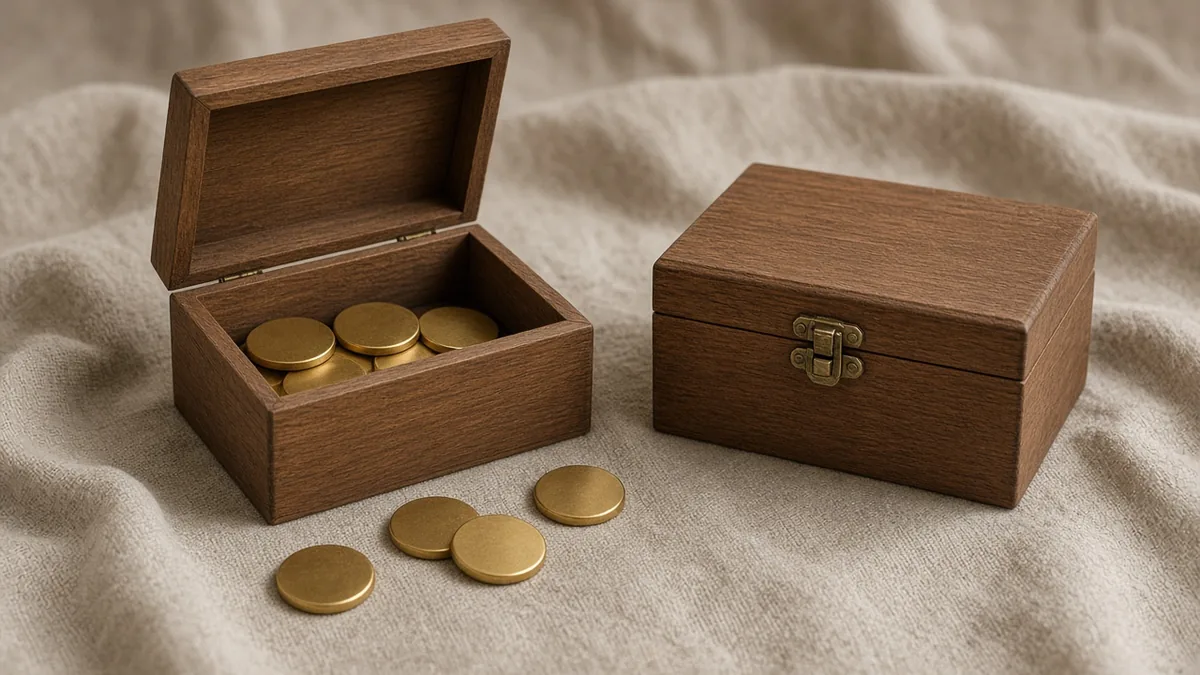
That is not the same as a method to avoid capital gains tax on a taxable-account sale you already made, or on metal you still hold personally. A precious metals IRA, including a gold IRA, changes when you pay taxes, if you follow the account rules. Retirement accounts can let investments grow tax deferred; that is an account rule, not a change to the tax implications of selling gold bullion you already hold personally. It does not rewrite the collectibles rate for gold holdings you sell outside the account, or the tax implications of selling precious metals from a taxable account. Physical precious metals sales in your own name still follow Topic 409.
See how to sell gold inside an IRA, a gold IRA versus holding physical gold yourself, and how metals are taxed inside versus outside an IRA. Funding a metals IRA is a later step; see a gold IRA rollover and the pointer on gold IRA companies. Exchange traded funds that hold metal or miners are a different vehicle, and retirement accounts do not change the tax consequences of a personal sale of physical gold bullion. Selling gold bullion from your own name is still a Topic 409 event.
Selling gold: frequent questions
How much tax will I pay if I sell gold?
It depends on your cost basis, your holding period, your tax bracket, and whether the sale is taxable or inside a retirement account. You pay taxes on the taxable gain, not automatically on the gross proceeds.
Do I have to pay capital gains tax if I sell my gold?
If you sell gold from a taxable account and have a gain, yes, you generally have to pay capital gains tax, or ordinary income tax on a short-term capital gain. A sale inside an IRA that stays in the account is not a current collectibles sale.
How much capital gains tax will I pay on $300,000?
There is no single answer, because $300,000 of proceeds is not $300,000 of gain. The tax on gold depends on basis, holding period, and your other taxable income.
Do you have to report if you sell gold?
Yes. You report the sale on Form 8949 and Schedule D when it is a taxable sale of a capital asset, even if the dealer never sends a 1099-B. The 2026 1099-B rules use a CFTC contract-and-quantity test, not a published dollar cutoff.
Is the tax on gold a flat 28%?
No. It is a maximum federal rate on net long-term collectibles gains. A lower ordinary rate can still apply. Short-term gains are taxed as ordinary income.
Do I pay tax on the full sale price?
No. You pay tax on the gain (proceeds minus adjusted basis).
Are IRA-eligible gold coins taxed at the stock rate if I hold them myself?
No. Section 1(h)(5) ignores the IRA coin-and-bullion exception. Those coins are still collectibles in a taxable account.
Does selling gold inside an IRA trigger the 28% collectibles rate?
Not as a current taxable sale if the proceeds stay in the IRA. Later distributions follow IRA rules.
Written by Tim Schmidt and reviewed for tax and account accuracy by Sean Webster, CPA. Last reviewed November 13, 2026 (America/New_York). Tax figures reflect IRS guidance for 2026 as of that date. This guide is for general education. It is not tax, legal, or investment advice, and it is not a recommendation to buy or sell any metal or to open any account. IRAInvesting.com is not a custodian, dealer, broker-dealer, or investment adviser. Before you act, talk with a licensed tax professional or adviser who can review your situation. Investing in precious metals involves risk, including the possible loss of principal. Metals can be volatile, and they do not pay interest or dividends. Past performance does not guarantee future results.