
Gold Coins vs Bars IRA: Premiums, Liquidity, and What Custodians Accept
Once you know a product is IRA-eligible, the remaining coins-versus-bars question is practical: what you pay over the gold price, how easily the holding can be liquidated in pieces, and what your custodian will actually accept. The investment is still gold, whether you buy gold coins, gold bars, or a mix. Eligibility — the two legal paths under IRC section 408(m), named coins including the American Gold Eagle exception, and qualifying bullion — lives on the guide to which gold coins and bars are IRA-eligible.
Reviewed by Sean Webster, CPA.
IRAInvesting.com may earn a referral fee from some companies we review. That does not change these rules. See our affiliate disclosure.
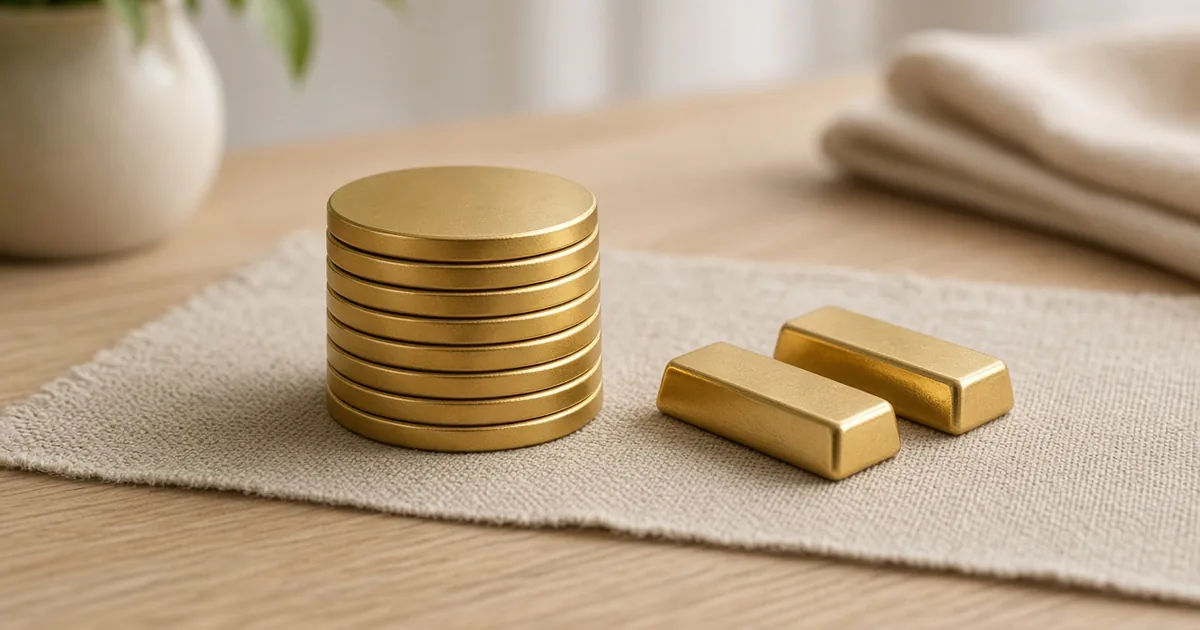
Eligibility comes first for gold IRAs
Gold IRAs can hold certain named gold coins, or qualifying gold, silver, platinum, or palladium bullion that is in the physical possession of a trustee. Section 408(m)(3)(B) requires bullion of a fineness equal to or exceeding the minimum a contract market requires for futures delivery. The tax code does not state a percentage. Do not treat 99.5%, or any other figure, as an IRS rule.
Proof, numismatic, and other high-premium collectible finishes are a separate eligibility problem. For high-premium or collectible pitches to watch for, see that guide. A product can fail IRA eligibility even if a dealer is happy to offer it in a taxable account.
Premiums, the gold price, and when you buy gold coins or gold bars
When you buy gold, you usually pay more than the current gold spot price. That difference is a premium, and it is a dealer and market price, not an IRS figure. It changes. This guide does not invent a typical range.
Lower premiums, higher premiums, and melt value
Large gold bars often carry lower premiums per ounce than smaller coins, in part because of lower manufacturing costs on bulk metal. When you buy gold coins, or other smaller purchases, you may pay higher premiums per ounce because each gold coin is individually minted. The only figure worth using is a dated premium from a named company’s own page.

The gold price itself is a market price. Melt value is the metal content times that price. Bullion coins and bars can trade close to melt value, or further above it, depending on demand, size, and fabrication. Private mints and government mints both produce bars and coins in various sizes; IRA eligibility still follows the statute and the custodian’s list, not the mint’s marketing.
Fee-stack anatomy — account fees, storage, and the buy/sell spread — stays on the guide to gold IRA fees and spreads. Premiums are one part of what you pay when investing in this metal. They are not the whole cost of the account, and they do not change the tax advantages of the IRA itself.
Liquidity: gold coins vs large bars, and coins in pieces
Liquidity is the ability to sell quickly at a price close to the prevailing gold price, Gold coins are often highly liquid in common sizes, especially well-known bullion coins from government mints, because dealers recognize them and will take smaller amounts. A one-ounce coin, or a few coins, can be placed without breaking a larger holding.

Bigger bars versus gold coins in pieces
A bigger bar can be efficient to hold if you want a specific amount of gold content in fewer pieces. It can be harder to sell quickly in a small slice, because liquidating a 10-ounce or kilogram gold bar generally means disposing of the entire unit, or finding a buyer who will take that exact piece. Smaller gold bars tend to be easier to place than kilogram pieces, but they can still be less flexible than a stack of gold coins.
Many investors choose a mix of coins and gold bars: gold bars for lower premiums on a larger holding, and gold coins for smaller purchases they may want to use in pieces. That mix is an investment strategy choice, not a requirement. Gold coins are not automatically the better investment, and gold bars are not automatically cheaper after storage and spread. Many investors will still compare gold coins vs gold bars on premium and liquidity before they buy.
A sale of gold coins or gold bars inside a gold IRA is a transaction in the account, not a current taxable collectibles sale. Taking an in-kind distribution and then making a sale in a taxable account is a different tax event. This page does not retarget those sale rules.
Buy gold coins, bullion coins, and government backing
Bullion coins from government mints often have government backing, and some are legal tender in their country of issue. Legal tender status is not what makes a coin IRA-eligible, and it is not a guarantee of a resale premium. The American Gold Eagle is a commonly discussed named coin; eligibility details stay on the eligibility page.
You can purchase gold coins that are not IRA-eligible, including many numismatic or proof issues, and hold them personally. That is a taxable-account purchase, not a gold IRA holding. If you buy gold coins for an IRA, confirm both the statutory path and the custodian’s current accepted-product list before you purchase coins or buy gold bars.
A gold ETF is a different product: it is a fund, not gold coins or gold bars titled in your gold IRA. Investing through a fund is not the same as investing in physical gold.
What custodians accept for gold bars and coins
A custodian’s accepted-product list is often tighter than the statute. The plan must allow the product, and the custodian must title and store it. Some custodians accept a wide selection of IRA-eligible gold coins and gold bars; others accept a shorter list. Ask for that custodian’s current list before you buy gold.

How gold IRA companies and custodians differ is a separate pointer page. Dealers can quote different premiums on the same gold coins and gold bars on the same day.
Storage is the same rule for coins and gold bars
Eligible bullion in a gold IRA must be in the physical possession of a trustee. Home storage is not an IRA option, and a safe deposit box in your name is not trustee possession. Taking delivery of IRA metal at home is inconsistent with that rule, whether the holding is gold coins or gold bars.

The form of the gold — gold coins or gold bars — can affect packaging, insurance handling at the depository, and sometimes the storage fee schedule. Those details stay on how gold IRA storage works and on the fees guide.
Physical gold is still gold, whether you hold gold coins or gold bars. It can be part of portfolio diversification for investors who want a holding that is not a share of a company. It does not pay interest or dividends. Match the product to your financial goals and risk. IRA eligibility is a tax-code rule, not a return to a gold standard.
For choosing gold or silver in an IRA, see that comparison. Silver and other precious metals follow their own eligibility path.
Physical gold, purchasing power, and portfolio diversification
Purchasing precious metals inside gold IRAs can give the same tax advantages as other IRA holdings: pretax growth may be tax-deferred, and a qualified Roth distribution may be tax-free. Those tax advantages attach to the account, not to the choice between coins and bars, and they do not change the investment risk or the value of the holding.
Many investors look at gold as a hedge against inflation, or as a way of preserving wealth when the dollar or another currency is under pressure. Other investors use gold as a hedge in a broader portfolio, but inflation does not guarantee a higher gold price, and wealth measured in the dollar can still fall in value. During economic downturns, the gold price can rise or fall. This is not a forecast about inflation, the dollar, or purchasing power.
Market value is what a buyer will pay, which can differ from melt value. The spot price is a reference, not a bid you are guaranteed to receive. If you liquidate inside the IRA, you typically do not take cash in hand until a distribution; the cash stays in the retirement account and can be reinvested. The money from a sale inside the account stays there until a distribution. If you hold metal personally, a sale of precious metals for cash is a taxable-account event.
Some holders use both gold coins and gold bars in the same gold IRA, alongside or instead of other precious metals such as silver. The benefits of gold coins are often liquidity and recognition. The benefits of gold bars are often lower premiums on size. Neither form is a world currency, even when a coin has a face value in a national currency. Government mints around the world issue bullion coins that dealers already know how to bid on. A government issue can be easier to place in the market on resale.
An investment in gold coins or gold bars is still an investment with risk. Many investors treat a modest metals position as one sleeve of a broader portfolio, not as the entire portfolio. Match any investment to your investment strategy and financial goals. Investing in gold does not replace a plan for retirement savings. Investing in gold IRAs gives investors a precious metals investment in a portfolio, and investing in that investment is still investing that can lose value. Investing in precious metals can lose value too.
Gold coins vs bars: which makes sense in an IRA?
The useful question is not which investment is “better” in the abstract. It is which IRA-eligible coins and gold bars your custodian will accept, what you will pay over the gold price, and whether you care more about lower premiums on size or about coins that can be easily sold in smaller amounts.
An existing retirement account can move into a self-directed IRA that holds metal, but the product decision still comes after eligibility, fees, and storage. Retirement savings in gold coins or gold bars remain subject to IRA distribution rules. The value of the investment will follow the gold price and the premium you paid, not a marketing claim about world demand or a floor under the currency.
Coins vs bars in a gold IRA: FAQs
Are IRA gold bars cheaper than coins?
Often large bars have a lower per-ounce premium than gold coins, but the only figure worth quoting is a dated price from a named seller. Do not invent a typical spread. Storage and the bid-ask spread also affect what you realize on resale.
Can I put any gold coin in an IRA?
No. Only excepted gold coins and qualifying bullion belong in gold IRAs. See the eligibility page. Many attractive gold coins are not IRA-eligible.
Does the IRS require 99.5% purity?
No. Section 408(m)(3)(B) does not state a percentage. It incorporates a contract market’s minimum delivery fineness and requires trustee possession. Do not treat a dealer’s purity claim as an IRS rule.
Will every custodian accept every eligible bar or coin?
No. Check the custodian’s current accepted-product list. A product can be eligible under the tax code and still be refused by a particular custodian or depository.
Is an American Gold Eagle better than a bar?
The Eagle is a named-coin exception, and it is legal tender in the United States, but “better” depends on the premium, liquidity, and what the custodian accepts. It is not automatically a better holding than an eligible gold bar with a lower premium.
Written by Tim Schmidt and reviewed for tax and account accuracy by Sean Webster, CPA. Last reviewed November 13, 2026 (America/New_York). Tax figures reflect IRS guidance for 2026 as of that date. This guide is for general education. It is not tax, legal, or investment advice, and it is not a recommendation to buy or sell any metal or to open any account. IRAInvesting.com is not a custodian, dealer, broker-dealer, or investment adviser. Before you act, talk with a licensed tax professional or adviser who can review your situation. Investing in precious metals involves risk, including the possible loss of principal. Metals can be volatile, and they do not pay interest or dividends. Past performance does not guarantee future results.